The Teeter FreeStep Recumbent Cross Trainer is a strong option if you want low-impact cardio that still feels like real work.
This Teeter FreeStep review focuses on whether its seated stride, dual-action design, and home-friendly features justify the space it takes.
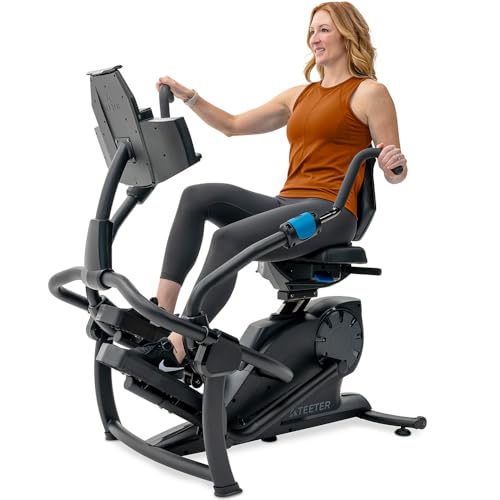
FreeStep Review Summary
Teeter positions the FreeStep as a zero-impact exercise bike alternative with a patented stride inspired by physical therapy equipment, and that framing makes sense for the buyer it targets.
If regular cardio machines feel harsh on your knees, hips, ankles, or back, this is one of the more compelling recumbent cross trainer options because it combines seated support with upper- and lower-body motion.
It is not trying to be the cheapest machine or the smallest one.
It is built for people who care more about joint-friendly consistency, total-body engagement, and long-term usability than about a minimalist footprint.
The FreeStep also stands out because Teeter highlights resistance control, a color console, goal-based workouts, and an app-based training library without requiring a subscription.
Review Scorecard
| Category | Score | Why it matters |
|---|---|---|
| Joint Comfort | 10/10 | Designed as a zero-impact seated stride with Teeter’s physical-therapy-inspired motion. |
| Full-Body Training | 9/10 | Dual power motion works upper and lower body at the same time. |
| Ease of Use | 8/10 | Electronic step lock, quick resistance controls, and a supportive seat improve daily usability. |
| Workout Variety | 8/10 | 21 pre-programmed workouts and the Teeter Move app add structure without a subscription. |
| Console and Tracking | 7/10 | The color LCD and seven metrics are practical, though not advanced enough for data-heavy users. |
| Space and Setup Fit | 6/10 | Transport wheels help, but this is still a substantial home machine. |
For the right buyer, the best reason to buy the FreeStep is comfort without giving up workout quality.
It suits users who want a seated cardio machine for regular use, especially if they are comparing it against recumbent bikes or typical cross trainers that rely on a more conventional cycle motion.
Key Features and Specifications of FreeStep
Teeter’s listing emphasizes a mix of rehabilitation-minded geometry and practical home-fitness features.
The core idea is the patented natural stride, which Teeter says is licensed from commercial physiotherapy steppers.
That matters because it is the defining trait of the machine: the motion is meant to feel easier on the joints than many upright or cycle-based alternatives while still engaging both halves of the body.
Several listed details help clarify who this machine is for:
- Zero-impact seated workout aimed at users who want less stress on joints and back.
- Dual power motion that works upper and lower body together, with the option to isolate arms or legs.
- 20 levels of magnetic resistance with quick-key control on the console.
- Color LCD screen with seven tracking metrics and 21 goal-based workouts.
- Bluetooth heart-rate compatibility with a separate monitor sold separately.
- Media rack and USB charging port for tablets or phones.
- Extra-large seat, adjustable height support, and soft-grip handles.
- Electronic step lock for easier entry and exit.
- Transport wheels for moving it around the room.
- Teeter Move app with trainer-led classes and no subscription requirement.
- User support range listed at 4 ft 11 in to 6 ft 6 in and up to 350 lb.
The value proposition is straightforward: Teeter is trying to make a machine that is accessible enough for regular home use, but stable and guided enough to feel purposeful.
If you are looking for a machine that can anchor a walking replacement routine, rehab-adjacent conditioning, or low-impact interval work, those details all point in the same direction.
Pros and Cons of FreeStep
Pros
- Very joint-conscious design for knees, back, ankles, and hips.
- Full-body movement makes sessions more efficient than a basic lower-body-only machine.
- Useful resistance range for both lighter cardio and more demanding workouts.
- Built-in training support through programmed workouts and the Teeter Move app.
- Practical comfort touches like the step lock, large seat, media rack, and cup holders.
Cons
- Large footprint compared with simpler cardio equipment.
- Console is functional, not premium if you want deep performance metrics.
- Separate heart-rate monitor requirement may bother data-focused users.
- Best fit is specific; people who want an upright bike feel may prefer a different machine.
The biggest tradeoff is obvious: you are paying for a more specialized motion pattern and a more supportive ride.
That is a strength if your body needs it, but it is less compelling if you mainly want compact storage or a familiar bike-style workout.
Who Should Buy FreeStep?
Buy the Teeter FreeStep if you want comfortable, repeatable cardio that does not beat up your joints.
It makes the most sense for older adults, people easing back into exercise, or anyone whose current bike or elliptical feels irritating after a few minutes.
It is also a strong fit if you want a single machine for whole-body conditioning at home.
Because the arm and leg systems work together, you can get more training density per minute than with a standard recumbent bike.
That can be especially useful for busy users who still want a serious cardio session.
You should probably skip it if you need a compact machine, if you want the smallest possible footprint, or if you prefer a more athletic, bike-like position.
It is also not the best pick for someone who wants advanced workout analytics, virtual cycling ecosystems, or a very stripped-down cardio device.
How FreeStep Performs in Daily Use
Seated Stride Feel
The most important daily-use question is whether the motion feels natural enough to keep using.
Teeter’s pitch is that the stride is based on physical-therapy equipment, and that is exactly why it matters: the machine is trying to reduce the awkwardness or impact that can make traditional cardio hard to sustain for sensitive joints.
Resistance and Training Control
With 20 resistance levels and console quick-keys, the FreeStep gives you enough control to move from warm-up to harder intervals without making the session feel complicated.
That range is broad enough for most home users, though serious athletes may still want more performance-focused feedback and programming.
Comfort and Accessibility
The large seat, step lock, cup holders, and transport wheels make this feel designed for practical repeat use rather than showroom appeal.
Those details do not sound exciting on paper, but they are exactly the features that determine whether a machine becomes part of your routine or sits unused.
Console and App Support
The color LCD, preset workouts, and Teeter Move app give the machine a clear “guided fitness” angle.
That is useful if you want structure without paying for a subscription, but the console still looks aimed at straightforward workout management rather than exhaustive training analysis.
Alternatives to FreeStep
If you like the idea of a seated cardio machine but want to compare options, these are credible Amazon search starting points:
A recumbent bike is the closest comparison if you mainly want seated cardio and back support.
A rower is less similar mechanically, but it can be a worthwhile alternative if your priority is full-body conditioning and you do not need the same joint-friendly seated stride.
Is FreeStep Worth It?
The Teeter FreeStep is worth it if your top priority is low-impact cardio that you will actually keep using.
Its strongest case is for buyers who value joint comfort, accessible motion, and a full-body workout more than compact size or flashy tracking.
If that description fits your home gym needs, the FreeStep is an easy machine to justify.
If you mainly want a familiar bike feel, minimal footprint, or more advanced console data, look at recumbent bike alternatives instead.