The [Keppi Bench1000 Weight Bench] review is for buyers who want a serious adjustable bench without jumping into commercial rack pricing or footprint.
It stands out because it combines a high stated capacity, a long backrest, and a broad range of incline, flat, and decline settings.
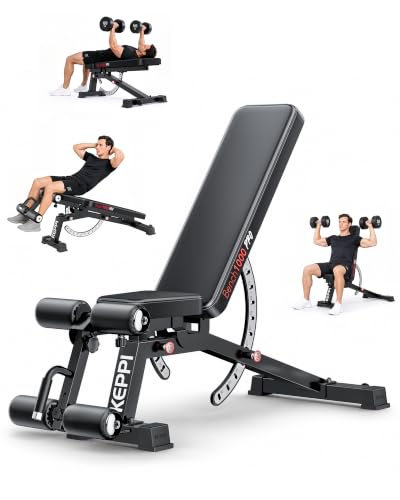
Bench1000 Review Summary
The Keppi Bench1000 makes sense for lifters who care more about stability, adjustability, and usable geometry than about a minimalist folding bench.
Its biggest appeal is straightforward: the listing points to a 1200 lb ASTM-certified capacity, a fully welded commercial-grade steel frame, and 12 backrest plus 3 seat settings, which gives it the kind of setup range that suits pressing, rows, shoulder work, core work, and decline movements in one station.
It is best for a home gym owner who wants one bench to do many jobs well.
It is less compelling for someone who only needs a flat bench, or for anyone with very limited space and no need for decline work or frequent angle changes.
Review Scorecard
| Category | Score | Buyer assessment |
|---|---|---|
| Stability | 9/10 | The welded steel frame and high capacity claim point to a bench designed for heavy pressing and controlled movement. |
| Adjustability | 10/10 | Twelve backrest positions and three seat settings create a wide training range for incline, flat, and decline work. |
| Comfort | 8/10 | The 36-inch backrest, dense foam, and sweat-resistant covering should support longer sessions well. |
| Home-gym practicality | 8/10 | Wheels, handle, and 98% pre-assembly make it easier to live with than many heavy benches. |
| Exercise coverage | 9/10 | The bench is built for pressing, rows, sit-ups, shoulder press, and decline work rather than a single use case. |
| Space efficiency | 7/10 | It is compact enough for a home gym, but the extended backrest and commercial-style build are not ultra-minimal. |
| Value fit | 8/10 | Strong if you want one durable, multipurpose bench; weaker if your needs are basic or purely casual. |
Key Features and Specifications of Bench1000
The Bench1000 is built around a heavy-duty adjustable bench formula.
The headline specs are practical rather than flashy: a 1200 lb weight capacity claim, a commercial-grade 70×50 mm steel frame, and an angle system that combines 12 backrest positions with 3 seat settings for up to 36 angle combinations.
That range matters because it changes how useful the bench is day to day.
A bench with real incline, flat, and decline flexibility can cover dumbbell press, barbell bench press, rows, shoulder work, and sit-ups without forcing you to buy a second station.
The listing also highlights an upgraded adjustable foot catch for decline movements, which should help keep the lower body anchored during sit-ups or decline pressing.
The rollers are described as soft foam, so the design appears aimed at control and comfort rather than hard gym-floor durability alone.
The backrest is another differentiator.
At 36 inches long, it is meant to give better support for the head, neck, and back than short pads that leave taller users feeling exposed on incline work.
The foam and sweat-resistant surface also suggest that the bench is intended for repeat training, not just occasional use.
At a glance
| Spec | Detail |
|---|---|
| Brand | Keppi |
| Model | Bench1000 |
| Type | Adjustable commercial-style FID bench |
| Capacity claim | 1200 lb |
| Frame | Fully welded 70×50 mm steel |
| Adjustments | 12 backrest positions, 3 seat positions |
| Angle range | Up to 36 angle combinations |
| Backrest length | 36 inches |
| Height | 17.3 inches |
| Mobility | Built-in wheels and handle |
| Assembly | 98% pre-assembled, about 10 minutes claimed |
The 17.3-inch height is also worth noting.
The listing positions it as IPF-standard optimal height, which should help with foot placement and stability during bench work.
For buyers who care about more traditional training geometry, that is a meaningful design choice rather than filler.
Pros and Cons of Bench1000
Pros
- Heavy-duty capacity claim gives confidence for serious home strength training.
- Wide angle range supports incline, flat, decline, and sit-up variations.
- Commercial-style welded frame suggests a more planted feel than lighter utility benches.
- Long backrest and dense padding should help with support on longer sessions.
- Wheels and handle make a heavy bench easier to reposition.
- Fast assembly claim is useful if you want to get training quickly.
Cons
- Bulkier than a basic flat bench, so it is not ideal for tiny spaces.
- More bench than some casual buyers need, especially if they only do flat pressing.
- Many adjustment options can slow setup compared with simpler one-angle designs.
- The feature set may be overkill if your workouts are occasional and light.
Who Should Buy Bench1000?
The Bench1000 is a good fit for lifters building a real home gym around compound and accessory movements.
If you want one bench that can handle incline pressing, flat pressing, shoulder work, rows, and decline core work, this is the type of product that can anchor that setup.
It also suits buyers who value a more commercial bench feel.
The welded steel frame, high capacity claim, and standardized height all point toward a bench meant for serious repeat use rather than a decorative or temporary solution.
It is less suitable for beginners who only need a cheap flat bench, or for users whose training is mostly bodyweight and light dumbbell work.
It is also not the best choice if you are trying to maximize portability above everything else, because the design leans toward sturdiness first.
If you already know you want decline support, more angle choices, and a bench that can live in a home gym for years, the Bench1000 is a sensible shortlist option.
Bench1000 Design and Training Use
Stability for heavy pressing
The strongest argument for the Bench1000 is structural confidence.
The listing’s welded commercial-grade frame and 1200 lb capacity claim are the sort of specs buyers look for when they want a bench that feels anchored under load, especially during bench press and dumbbell pressing.
Adjustability across more movements
The 12 backrest positions and 3 seat settings create enough flexibility to move from pressing angles to shoulder work and decline core work without needing a different bench.
That makes it more useful than many benches that only cover a narrow incline range.
Comfort and support
The 36-inch backrest, dense foam, and sweat-resistant cover should help the bench feel supportive for a wider range of body types.
Taller users in particular may appreciate that the backrest is described as extended rather than compact.
Living with it in a home gym
The built-in wheels, handle, and near-complete assembly matter because heavy benches are often annoying to move and set up.
These practical details make the Bench1000 more realistic as a daily-use piece of equipment rather than a one-time purchase that stays in one awkward spot.
Alternatives to Bench1000
If you want a similar adjustable bench with a different balance of features, these are worth comparing:
- REP Fitness AB-3100 adjustable bench
- Rogue adjustable bench
- PRx adjustable bench
- Flybird adjustable weight bench
The REP and Rogue options make sense if you want to compare against established strength brands with a strong bench reputation.
Flybird is the more obvious comparison if you are looking for a lighter, more mainstream home-gym bench category.
PRx is useful to check if you want a different style of adjustable setup that may fit a compact training area better.
Is Bench1000 Worth It?
Yes, if you want a durable adjustable bench that can do more than flat pressing.
The Bench1000 looks worth it for home-gym buyers who care about stability, broad angle coverage, and a bench that is built for regular strength training rather than occasional use.
If your needs are simple, there are cheaper and lighter benches that will do the job.
But if you want one bench to cover heavy pressing, decline work, and everyday home-gym versatility, the Bench1000 is a strong buy candidate.