The best stability balls for home workouts can add core training, balance work, mobility exercises, posture practice, and low-impact strength training to a small home gym. The right choice depends on more than size: construction, weight capacity, included accessories, and intended use all matter.
We compare 10 options ranging from traditional full-size exercise balls to half-ball trainers and rehabilitation-focused models, helping you choose a stable, appropriately sized ball for your space and routine.
Best 10 Stability Balls for Home Workouts Picks for 2026
Most Versatile

- Five sizes from 45 to 85 cm
- Anti-burst PVC with slow deflation
- Includes pump and accessories
Best For: Multi-use home workout setups
Best for Guided Training

- Anti-burst anti-slip vinyl
- Supports strength, balance, and rehab drills
- Includes trial access to 500+ workouts
Best For: Structured home training with workout guidance
Best Grip

- Frosted surface with anti-slip stripes
- 330-pound load capacity
- Five sizes with pump included
Best For: Grip-focused yoga, Pilates, and core work
Best for Posture and Rehab
- Designed for users 5'7" to 6'1"
- Slow-deflate burst-resistant material
- Supports posture, balance, and rehab
Best For: Taller users and rehab-oriented routines
Versatile Stability Pick

- Five sizes from 45 to 85 cm
- 660-pound anti-burst honeycomb PVC
- Includes pump and two air plugs
Best For: Shared home gyms, core work, Pilates, and active sitting
Professional-Grade Classic
THERABAND Standard Exercise Ball

- 55 cm size for users 5'1" to 5'6"
- Slow-deflate construction
- Textured grip for balance and seated use
Best For: Compact home workouts, office sitting, and balance training
Stability and Support Choice

- 65 cm anti-burst PVC ball
- Includes pump and stabilizing base
- Supports workouts, active sitting, and pregnancy use
Best For: Home gyms needing added stability and multipurpose support
Versatile Half-Ball Trainer
VEVOR Half Exercise Ball Trainer

- Half-ball design for balance and strength training
- Includes resistance bands and foot pump
- Compact, portable, and high-capacity construction
Best For: Full-body training, balance work, and rehabilitation exercises
Heavy-Duty Classic Ball
Extra Thick Exercise Yoga Ball

- Five size options from 45 cm to 85 cm
- PVC construction rated beyond 330 pounds
- Includes quick pump and one-year warranty
Best For: Core, yoga, pregnancy, posture, and low-impact workouts
Complete Two-Ball Set
kisnbld Exercise Ball with Pilates Ball
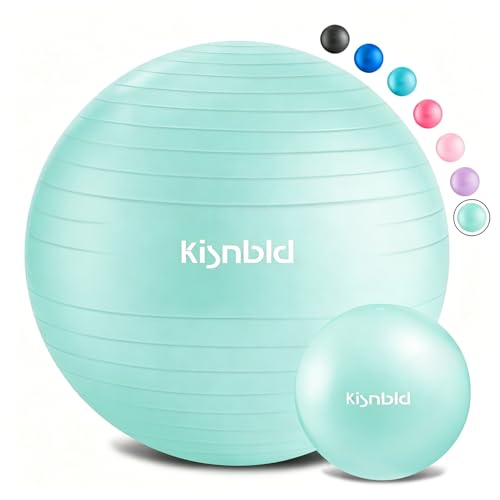
- Includes large stability ball and 9-inch Pilates ball
- Textured surfaces support grip and balance
- Comes with foot pump and inflation accessories
Best For: Versatile home workouts, Pilates, posture, and targeted core work
Most Versatile – URBNFit Yoga Ball
For shoppers comparing stability balls for home workouts, the URBNFit Yoga Ball stands out for its broad range of uses. Its anti-burst PVC construction, multiple size options, included pump, and 330-pound load rating support exercise, stretching, active sitting, and pregnancy-related use.
Best For: Households wanting one ball for workouts, posture-focused sitting, stretching, or pregnancy use.
Pros:
- Available in five sizes from 45 to 85 cm.
- Anti-burst construction is designed to deflate slowly if punctured.
- Includes a pump, stoppers, and stopper remover.
- Supported by a 12-month replacement promise for air-holding failures.
Cons:
- The 65 cm version is intended for users around 5’1″ to 5’8″, so taller users may need another size.
- It ships deflated and requires an initial inflation and overnight stretching period.
The URBNFit is a practical all-rounder, especially if several people or activities will share the same ball. Its size range and multipurpose design make it easier to adapt to a home setup.
Best for Guided Training – TRX Stability Ball
The TRX Stability Ball is a strong option for stability balls for home workouts when structured training matters. Its anti-slip vinyl construction supports core, balance, strength, mobility, and rehabilitation exercises, while the included TRX Training Club trial adds access to guided workouts.
Best For: Users who want a durable stability ball paired with on-demand workout guidance.
Pros:
- Anti-burst, anti-slip vinyl construction is designed for heavy use.
- Supports planks, squats, crunches, balancing, and wall-ball work.
- Available in 55 cm and 65 cm sizes for different heights.
- Includes a trial for more than 500 on-demand TRX workouts.
Cons:
- Only two size options are listed.
- Ships deflated, so setup is required before use.
This ball is particularly appealing if you value programming as much as equipment. The TRX app trial can help turn a basic ball into part of a more organized training routine.
Best Grip – Trideer Yoga Ball
For stability balls for home workouts where traction is a priority, the Trideer Yoga Ball uses anti-slip stripes and a frosted surface to help maintain controlled contact. It also offers five sizes, a 330-pound capacity, and the pump and stoppers needed for setup.
Best For: Users who want extra surface texture for yoga, Pilates, core training, or active sitting.
Pros:
- Frosted texture and anti-slip stripes provide added grip.
- Rated to hold up to 330 pounds.
- Available in five sizes for different users and activities.
- Includes a pump, two air stoppers, and instructions.
Cons:
- The included pump type varies by ball size.
- The listed 65 cm version may not suit every height.
The Trideer is a sensible pick for movement-heavy routines where a secure-feeling surface is useful. Its broad size selection also makes it easier to match the ball to your body and intended use.
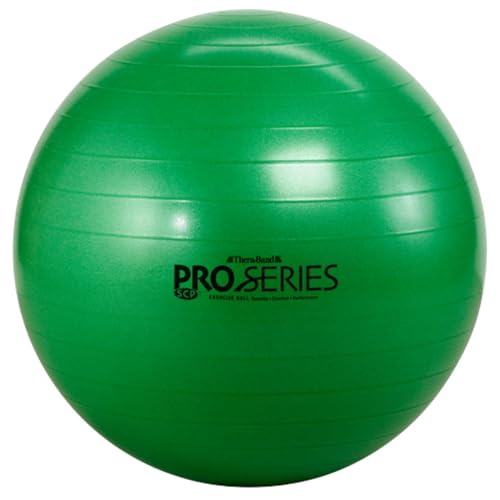
Best for Posture and Rehab – THERABAND Exercise Ball
The THERABAND Exercise and Stability Ball is designed for shoppers seeking stability balls for home workouts that also support posture, balance, coordination, and rehabilitation. This 65 cm professional-grade ball has a textured grip, slow-deflate construction, and a recommended height range of 5’7″ to 6’1″.
Best For: Taller teens and adults using a stability ball for core training, active sitting, mobility, or rehab-oriented exercises.
Pros:
- Designed for users approximately 5’7″ to 6’1″ tall.
- Slow-deflate, burst-resistant construction supports safer use.
- Suitable for yoga, Pilates, stretching, balance, and active sitting.
- Textured surface helps prevent slipping and wipes clean with a damp cloth.
Cons:
- Only the 65 cm size is specified.
- No pump is listed among the included components.
The THERABAND is a focused choice for users who fit its recommended height range and want a ball suited to both fitness and controlled rehabilitation work. Its professional-oriented design also makes it useful beyond occasional exercise.
Versatile Stability Pick – APEXUP Yoga Ball
For shoppers comparing stability balls for home workouts, the APEXUP Yoga Ball stands out for its broad size selection, grippy surface, and slow-deflate honeycomb PVC construction. It includes a pump and two air plugs for convenient setup.
Best For: Home users who want adjustable sizing for core training, Pilates, stretching, or active sitting.
Pros:
- Available in five sizes from 45 to 85 cm to accommodate different heights.
- Anti-slip texture helps maintain grip on hard floors during balance exercises.
- Honeycomb PVC supports up to 660 pounds and is designed to deflate slowly if punctured.
- Includes a pump and two air plugs for quick setup.
Cons:
- Choosing the correct size requires checking the size guide carefully.
- The supplied details identify the listed model as 65 cm, so other sizes may require selecting a different option.
With its size range and multipurpose design, the APEXUP is a practical choice for households sharing one exercise ball or combining workouts with active sitting.
Professional-Grade Classic – THERABAND Standard Exercise Ball
Among stability balls for home workouts, the THERABAND Standard Exercise Ball offers a focused 55 cm format for users around 5’1″ to 5’6″. Its slight texture, slow-deflate construction, and compact design support balance drills, core training, and seated use.
Best For: Teens and adults approximately 5’1″ to 5’6″ who want a compact ball for home, office, or gym use.
Pros:
- 22-inch, 55 cm size is designed for users about 5’1″ to 5’6″ tall.
- Slow-deflate construction provides added time to respond if the ball is punctured.
- Slightly textured surface and comfortable grip help reduce slipping.
- Lightweight, space-saving design is easy to store and wipe clean.
Cons:
- Only the 55 cm size is specified, limiting fit options for significantly shorter or taller users.
- The supplied details do not mention an included pump.
This is a straightforward option when the recommended height range matches your needs and you prefer a compact ball that can move between workouts and active office sitting.
Stability and Support Choice – Retrospec Luna Exercise Ball
The Retrospec Luna combines an anti-burst 65 cm exercise ball with a pump and stabilizing base, making it a useful candidate among stability balls for home workouts. It is designed for core training, stretching, active sitting, and pregnancy-related support.
Best For: Users seeking a 65 cm ball with a base for added stability during home workouts, office sitting, or pregnancy support.
Pros:
- Thick anti-burst PVC is rated in the supplied details for a 1,000-pound capacity.
- Includes both a pump and base for setup and added stability.
- Non-slip surface supports seated use and movement-based workouts.
- Versatile enough for gentle stretching, core training, HIIT, physical therapy, and pregnancy use.
Cons:
- The 65 cm size may not suit every user height or preferred exercise setup.
- Its included base and 4-pound weight may make it less compact to store than a ball alone.
The Luna is particularly compelling if you want more than a basic exercise ball, since its included base adds stability for resistance-band work and seated routines.
Versatile Half-Ball Trainer – VEVOR Half Exercise Ball Trainer
For shoppers comparing stability balls for home workouts, this VEVOR half exercise ball trainer stands out as a compact option for balance, strength, stretching, and rehabilitation exercises. Its half-ball design supports movements such as planks, lunges, push-ups, and step-ups, while the included resistance bands expand training possibilities.
Best For: Full-body strength work, balance training, stretching, and rehabilitation-focused home routines.
Pros:
- Supports a wide range of strength, balance, and mobility exercises.
- Includes resistance bands and a foot pump.
- Made with high-strength, explosion-proof materials and rated for substantial weight capacity.
- Compact and portable for storage, travel, or gym use.
Cons:
- The half-ball format may not replace a full-size exercise ball for seated or pregnancy exercises.
- Its 22.8-inch footprint requires a stable, clear workout surface.
This is a practical choice if you want one compact trainer for varied home workouts rather than a traditional round stability ball. Its included accessories and rehabilitation-friendly design add value for users who want more than basic core exercises.
Heavy-Duty Classic Ball – Extra Thick Exercise Yoga Ball
This extra-thick yoga ball is a straightforward pick among stability balls for home workouts, with five size options for different users and routines. The PVC construction is designed for anti-burst and slip-resistant performance, while the ball can support core training, balance work, posture exercises, relaxation, and low-impact movement.
Best For: Core workouts, yoga, pregnancy or postpartum exercise, posture work, and versatile low-impact training.
Pros:
- Available in five sizes from 45 cm to 85 cm.
- Heavy-duty PVC construction is rated beyond 330 pounds.
- Suitable for fitness, physical therapy, massage, posture improvement, and relaxation.
- Includes a quick pump and a one-year manufacturer warranty.
Cons:
- The ball needs an initial partial inflation and a 1–2 day settling period before full inflation.
- Users must select the size carefully because the available options vary considerably.
Choose this model if size flexibility is a priority or if you want a traditional exercise ball for several types of low-impact training. Its broad use range makes it adaptable, but following the inflation instructions is important for proper setup.
Complete Two-Ball Set – kisnbld Exercise Ball with Pilates Ball
For a more complete home setup, the kisnbld exercise ball pairs a large stability ball with a matching 9-inch Pilates ball. The textured PVC surfaces are designed to provide grip for yoga, Pilates, balance training, and core work, while the included foot pump and accessories make inflation and setup convenient.
Best For: Home users who want one large ball for stability work plus a small ball for targeted core, pelvic-floor, or rehabilitation exercises.
Pros:
- Includes both a large exercise ball and a 9-inch Pilates ball.
- Textured, anti-slip surfaces support grip during workouts.
- Useful for yoga, Pilates, posture improvement, pregnancy exercises, and low-impact routines.
- Includes a foot pump, straws, air plugs, plug puller, and manuals.
Cons:
- The product arrives deflated and requires a 24-hour rest period before final inflation.
- The 22-inch size is intended for shorter users; most users may need 26 inches or larger.
- The supplied details contain inconsistent age and size information, so buyers should verify the selected option carefully.
This set offers more exercise variety than a single stability ball because the smaller Pilates ball can support focused movements and rehabilitation work. It is especially appealing for users who want equipment for both general balance training and targeted exercises.
How We Picked the Best Stability Balls for Home Workouts
We focused on the features that have the greatest effect on safety, comfort, and everyday usefulness. Our comparison considers anti-burst construction, stated weight capacity, available sizes, inflation equipment, surface grip, portability, and the type of training each ball supports. We also included established fitness brands alongside versatile value-oriented options, since shoppers may prioritize different combinations of durability, price, and specialized features.
Because an exercise ball is only useful when it matches your body and available space, size selection and intended use received particular attention. A ball for desk sitting or pregnancy may need different characteristics than one used for intense core exercises or balance training.
Quick Comparison
Traditional round stability balls are the most versatile choice for seated exercises, core work, stretching, and mobility drills. Models with a pump included are convenient for first-time buyers or replacing an old ball. Higher-capacity, extra-thick designs may suit heavier users or demanding routines, but always follow the manufacturer’s stated limits.
A half-ball trainer is more compact and provides a fixed platform for balance and resistance-band exercises. It is often easier to store than a full-size ball, although it does not replace the range of seated and supine movements possible with a standard round model. Rehab-oriented balls may emphasize controlled movement, posture, and coordination over high-intensity training.
Key Buying Factors for Stability Balls for Home Workouts
Size and Inflation
Choose a diameter that lets your knees remain roughly level with, or slightly lower than, your hips when seated. Common sizes include 55, 65, and 75 centimeters, but height recommendations vary by manufacturer and by whether the ball is used for exercise or sitting. Inflate it firmly enough to provide support without making it excessively hard or unstable.
Safety and Durability
Look for anti-burst or slow-deflation construction, a textured surface, and a clearly stated weight limit. Keep the ball away from sharp edges, rough flooring, heaters, and pets. Inspect it regularly for cuts, unusual bulges, or leaks, and replace it if the material is damaged.
Use Case and Accessories
Consider whether you need a ball for core workouts, pregnancy exercises, posture practice, office sitting, rehabilitation, or general mobility. A pump, resistance bands, foot ring, or storage features can add convenience, but accessories should not outweigh the importance of correct sizing and reliable construction.
Who Should Buy Which Stability Balls for Home Workouts?
Choose a standard round ball if you want one versatile option for home workouts, stretching, balance drills, and occasional desk use. A model with multiple size choices is useful for households with users of different heights. Choose an extra-thick or high-capacity design if you need additional load support, while checking the manufacturer’s specifications rather than relying on marketing claims alone.
Beginners and shoppers replacing a first exercise ball may benefit from a package that includes a pump. Users focused on rehabilitation, posture, or controlled balance work should prioritize a predictable surface and appropriate firmness. If storage space is limited or you primarily want balance and resistance-band exercises, a half-ball trainer may be the better fit. Whichever model you choose, use it on a clear, non-slip surface and progress gradually.