Manual curved treadmills deliver a challenging, self-powered workout without a motor or outlet, making them a favorite for sprint intervals, HIIT, and serious calorie burn.
Below, we break down the best options for 2026 based on resistance, stability, display features, and home-versus-commercial use so you can choose with confidence.
Best 10 Manual Curved Treadmills Picks for 2026
Commercial Sprint Training
SB Fitness CT700 Curved Treadmill

- Self-generated design with no maximum speed
- 8 resistance levels for tougher intervals
- 19-inch-wide track with digital workout data
Best For: Commercial gyms and serious sprint training
Space-Saving Home Option
Foldable Curved Manual Treadmill

- Foldable design helps save space at home
- No speed limit for self-paced training
- LED display and anti-slip rubber track
Best For: Home runners who want a foldable non-electric treadmill
Balanced Training Pick
SB Fitness CT400 Curved Treadmill
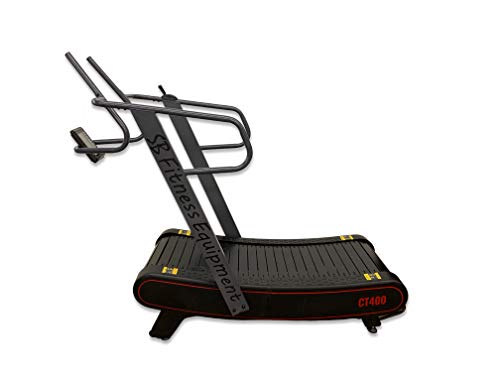
- Self-generated with 3 resistance levels
- Flexible slats add shock absorption
- Bluetooth plus digital workout display
Best For: Versatile training with a more moderate commercial setup
Heavy-Duty Value
DELAVIN Curved Manual Treadmill

- 440-lb capacity for heavier-duty use
- 4 resistance levels for varied training
- Curved belt with shock absorbers and LED display
Best For: High-capacity home, gym, hotel, or rehab use
Self-Powered Home & Light Commercial Pick
SB Fitness CT550 Curved Treadmill

- Self-generated design needs no power outlet.
- 8 magnetic resistance levels for workout control.
- LCD tracks time, speed, distance, calories, and heart rate.
Best For: Home or light commercial use with adjustable resistance
Heavy-Duty Commercial Runner

- Self-propelled curved design with no power outlet needed.
- 27.2-inch wide belt and 660-lb load rating.
- Display tracks time, distance, pace, calories, speed, and heart rate.
Best For: High-capacity training in home gyms or commercial spaces
High-Intensity HIIT Choice
Curved Manual Treadmill with Shock Absorption

- Self-powered curved belt supports stride-driven training.
- 5-layer belt is designed to reduce impact on joints.
- 6-level resistance knob and digital monitor support interval work.
Best For: HIIT, sprinting, and conditioning with joint-conscious design
High-Resistance All-Rounder
Manual Curved Treadmill with 8-Level Resistance

- 8 resistance levels for walking to sprint work
- Extra-wide curved belt with shock absorption
- 440 lb capacity with alloy steel frame
Best For: users wanting adjustable manual training from cardio to HIIT
Commercial-Style Powerhouse
Curved Manual Treadmill with 4 Resistance Levels

- 4 resistance levels for mixed-intensity training
- 63 x 19 inch belt with curved running surface
- Commercial-grade build with about 450 lb capacity
Best For: buyers wanting a durable self-powered treadmill for home gym training
Smart Compact Trainer
2026 Manual Curved Treadmill with Digital Display
- 8 magnetic resistance levels with durable adjustment
- LCD shows pace, calories, speed, and heart rate
- Transport wheels support easier storage and movement
Best For: users who want structured workouts and a self-powered treadmill for home spaces
Commercial Sprint Training – SB Fitness CT700 Curved Treadmill
If you want manual curved treadmills built for hard, fast sessions, the SB Fitness CT700 is aimed squarely at sprinting, sled-push style effort, and HIIT. Its self-generated design, 8 resistance levels, and no maximum speed make it a strong fit for athletes who want quick pace changes and a wide running surface.
Best For: Commercial gyms, serious runners, and athletes who want a durable curved treadmill for sprint intervals and high-intensity training.
Pros:
- 8 resistance levels add challenge for stronger conditioning work.
- 19-inch-wide, 66.5-inch-long track gives generous room for running.
- Digital display tracks time, distance, speed, calories, and total miles.
- Multi-grip handrails and rigid rubber slats support comfort and grip.
Cons:
- At 308 pounds, it is heavy and not meant for casual rearranging.
- Best suited to focused training rather than simple steady-state walking.
The CT700 stands out if your priority is intensity, control, and commercial-grade feel. Among manual curved treadmills, it offers one of the stronger combinations of resistance levels and track size for demanding workouts.
Space-Saving Home Option – Foldable Curved Manual Treadmill
For buyers comparing manual curved treadmills for home use, this non-electric model focuses on simplicity, foldability, and joint-friendly running mechanics. It has a zoned curved deck, anti-slip rubber tracks, and no speed limit, so you control the pace from easy runs to sprint work.
Best For: Home users who want a foldable, non-electric curved treadmill for running, sprint training, and tighter spaces.
Pros:
- Foldable handrail design helps save space when not in use.
- No speed limit gives full control over pace and effort.
- Anti-slip rubber track adds grip and safety during training.
- LED display shows time, calories, speed, and distance.
Cons:
- Smaller 15.75-inch-wide track is less spacious than commercial units.
- Best weight capacity is 350 lbs, which may not suit every user.
This model makes sense if you want a manual curved treadmill that is easier to store and straightforward to use. It is a practical pick for everyday home running, especially when space matters.
Balanced Training Pick – SB Fitness CT400 Curved Treadmill
If you want manual curved treadmills that balance versatility with a more manageable footprint than larger commercial models, the SB Fitness CT400 is worth a look. It is self-generated, offers 3 resistance levels, and uses flexible track slats designed to add shock absorption for a smoother-feeling workout.
Best For: Users who want a self-generated curved treadmill for walking, running, sport-specific training, and HIIT.
Pros:
- 3 resistance levels make it easy to vary workout intensity.
- Flexible track slats are designed for added shock absorption.
- Digital display shows time, distance, speed, calories, and total miles.
- Bluetooth connectivity adds an extra convenience feature.
Cons:
- Fewer resistance levels than the CT700.
- Heavier than a typical home cardio machine at 145 pounds.
The CT400 is a strong middle-ground option if you want the curved-treadmill training style without jumping to the most aggressive setup. It is especially appealing for buyers who value versatility and joint-friendly slat construction.
Heavy-Duty Value – DELAVIN Curved Manual Treadmill
This curved manual treadmill is built for buyers who want a sturdy, no-electric option with strong weight capacity and simple pace control. The DELAVIN model uses a curved running belt, 4 resistance levels, and fast acceleration and deceleration response for walking, jogging, sprinting, and HIIT.
Best For: Home, gym, hotel, or rehab settings where a high-capacity manual curved treadmill is needed.
Pros:
- 440-lb capacity is the highest in this group.
- 4 resistance levels support a wider range of workout intensity.
- Wide 18.9-inch belt and shock absorbers aim to improve comfort.
- LED display tracks time, speed, path, and calories.
Cons:
- Maximum speed is listed at 12 mph, lower than some alternatives.
- At 286 pounds, it is a substantial machine to place and move.
The DELAVIN is a practical choice if load capacity and durability are higher priorities than compactness. It offers a strong feature set for users who want a stable manual curved treadmill for consistent everyday training.
Self-Powered Home & Light Commercial Pick – SB Fitness CT550 Curved Treadmill
If you want manual curved treadmills with a straightforward, no-outlet setup, the SB Fitness CT550 is built for home workouts or light commercial use. Its self-generated design, 8 levels of magnetic resistance, and 20-inch wide running surface make it a practical option for walking, jogging, running, and interval work.
Best For: Home users or light commercial spaces that want a self-powered curved treadmill with adjustable resistance and workout tracking.
Pros:
- Self-generated power source means no outlet is required.
- 8 magnetic resistance levels let you fine-tune intensity.
- LCD display tracks time, speed, distance, calories, and heart rate.
- 20-inch wide running surface and 11-inch step-up height support easier use.
Cons:
- Maximum weight recommendation is 350 pounds, which is lower than some heavy-duty rivals.
- It is a larger machine at 70 inches deep, so it needs dedicated floor space.
The CT550 is a balanced choice if you want the simplicity of a manual curved treadmill with useful tracking and resistance control. It stands out most for combining self-powered operation with a more user-friendly deck size and a light-commercial build.
Heavy-Duty Commercial Runner – Non-Electric Curved Treadmill
Among manual curved treadmills, this non-electric model is geared toward users who want a large, stable platform and a more rugged commercial feel. It uses a self-propelled curved belt, 6 adjustable resistance levels, and a built-in display for tracking core workout metrics without needing a power outlet.
Best For: Athletes, home gym users, and commercial settings that need a high-capacity curved treadmill with a large running belt.
Pros:
- Self-powered operation requires no electrical connection.
- Large 27.2-inch wide running belt offers more room for varied strides.
- 6 resistance levels help tailor workout intensity.
- Display tracks time, distance, pace, calories, speed, and heart rate.
Cons:
- At about 370 lbs, it is heavy and not easy to move frequently.
- No assembly is needed, but its size still requires significant floor space.
This is a strong pick if capacity and stability matter more than portability. It leans into the strengths of manual curved treadmills by offering self-propelled training, a spacious belt, and a very high weight limit.
High-Intensity HIIT Choice – Curved Manual Treadmill with Shock Absorption
If your priority is performance-focused manual curved treadmills, this self-powered model is built for interval training, sprint work, and conditioning. It uses a 6-level resistance knob, a 5-layer shock-absorbing belt, and a digital monitor to keep the workout practical for home gyms and light commercial settings.
Best For: HIIT users, runners, and conditioning-focused buyers who want a manual curved treadmill with strong impact protection.
Pros:
- Self-powered design lets your stride control the belt.
- 5-layer shock-absorbing belt helps reduce impact on joints.
- 6-level metal resistance knob offers quick intensity changes.
- Digital monitor tracks speed, time, distance, calories, pulse, and wattage.
Cons:
- At 316 lbs, it is substantial and not meant for easy daily repositioning.
- The listed maximum speed is stated in a way that may be less intuitive than standard treadmill specs.
This treadmill is aimed at users who want a more serious training tool than a basic manual unit. Its blend of curved-belt mechanics, shock absorption, and resistance control makes it a good fit for hard intervals and regular conditioning sessions.
High-Resistance All-Rounder – Manual Curved Treadmill with 8-Level Resistance
If you want a manual curved treadmill that can scale from walking to hard sprint intervals, this model stands out for its 8 resistance levels and fast human-powered speed response. The curved deck, wide belt, and built-in shock absorption are aimed at users who want a lower-impact feel without giving up intensity.
Best For: Home users and gym setups that want a motorless treadmill with adjustable resistance for cardio, fat burning, and HIIT.
Pros:
- 8 adjustable resistance levels for varied workout intensity
- Wide 66.5 x 27.1 inch curved running belt for extra space
- Shock absorbers help reduce joint impact and running vibration
- 440 lb weight capacity with alloy steel frame and transport wheels
Cons:
- Manual design means effort directly determines pace, which may be demanding for beginners
- Larger footprint may be less convenient in very tight spaces
Overall, this is a strong pick if you want one of the more adjustable manual curved treadmills in the lineup. It combines a roomy running surface, simple speed control, and a heavy-duty build for users focused on serious training.
Commercial-Style Powerhouse – Curved Manual Treadmill with 4 Resistance Levels
This curved manual treadmill is built for users who want a commercial-style, self-powered running machine with a simple resistance range and a sturdy frame. The 4 resistance levels, quick acceleration response, and broad running surface make it practical for everything from light jogging to HIIT.
Best For: Home gym users who want a durable, non-electric curved treadmill with a high weight capacity and easy pace changes.
Pros:
- 4 adjustable resistance levels for jogging, sprinting, and interval work
- 63 x 19 inch curved belt supports a spacious running feel
- Self-powered operation with easy front-to-back speed control
- Commercial-grade steel build with about 450 lb capacity
Cons:
- Only 4 resistance levels, so it offers less granularity than 8-level models
- Heavy unit at 354 lb, which may be harder to reposition often
For buyers prioritizing durability and a straightforward training experience, this model makes a lot of sense. It emphasizes stability, a roomy belt, and low-maintenance operation over extra bells and whistles.
Smart Compact Trainer – 2026 Manual Curved Treadmill with Digital Display
For shoppers comparing manual curved treadmills, this 2026 model focuses on guided training and a cleaner, more compact setup. It combines 8 resistance levels, a multifunction LCD, and a self-powered design, making it a practical option for structured cardio and home use.
Best For: Home, apartment, or studio users who want a non-electric curved treadmill with training modes and easy storage.
Pros:
- 8 magnetic resistance levels with a more durable metal adjustment system
- LCD tracks time, distance, pace, calories, speed, and heart rate
- Curved, shock-absorbing belt is designed to reduce impact on joints
- Transport wheels make movement and storage easier
Cons:
- Max weight recommendation is 440 lb, slightly below some heavy-duty competitors
- Still a full-size treadmill, so compact does not mean tiny
This is a sensible pick if you want training data and resistance control without needing electricity. It balances durability, ease of movement, and workout tracking in a way that suits frequent home use.
How We Picked the Best Manual Curved Treadmills
We focused on the features that matter most in Manual Curved Treadmills: frame stability, belt feel, resistance control, console readability, and overall suitability for the intended setting. We also considered whether each model is better suited to home training, garage gyms, or heavier light-commercial use.
Because these machines are self-powered, we gave extra weight to running surface quality, smoothness under different speeds, and whether the treadmill supports both steady-state cardio and explosive sprint work.
Quick Comparison
In general, the strongest commercial-style machines offer higher durability, more resistance levels, and better support for sprint intervals. Midrange home options tend to balance foldability, simpler displays, and lighter footprints. If you want a tougher training feel, look for a more aggressive curve and multiple resistance settings; if comfort and convenience matter more, prioritize a stable deck, clear console, and compact design.
Key Buying Factors for Manual Curved Treadmills
Resistance and Training Feel
Resistance levels affect how hard the belt feels to drive and how well the treadmill supports interval work. More levels usually give you better control over workout intensity and make the machine more versatile for different users.
Build Quality and User Weight Rating
A strong frame and higher weight capacity are essential, especially if multiple people will use the machine. For frequent use, look for commercial-grade construction, reinforced handrails, and a belt system designed for repeated high-output training.
Console Features
A basic display can still be useful if it shows speed, time, distance, calories, and resistance. More advanced monitors help with pacing and workout tracking, but they should not come at the expense of stability or belt performance.
Size, Storage, and Placement
Manual Curved Treadmills can take up significant floor space. Foldable or more compact models work better in home gyms, while larger non-folding units are usually the better choice for dedicated training spaces.
Noise and Maintenance
Since there is no motor, these machines can be quieter than powered treadmills, but belt construction and frame quality still affect noise. Choose low-maintenance materials and easy-to-clean surfaces if convenience matters.
Who Should Buy Which Manual Curved Treadmills?
If you want intense sprint and sled-push style training, choose a heavier-duty model with multiple resistance levels and a stable commercial frame. If you are building a home cardio setup, a foldable or space-conscious option may be the better fit. For users who mainly want walking, jogging, or general fitness, a simpler curved treadmill with a readable display and moderate resistance can deliver plenty of value.
For buyers comparing Manual Curved Treadmills, the best choice is the one that matches your workout style, available space, and expected training frequency—not just the highest resistance count on the spec sheet.